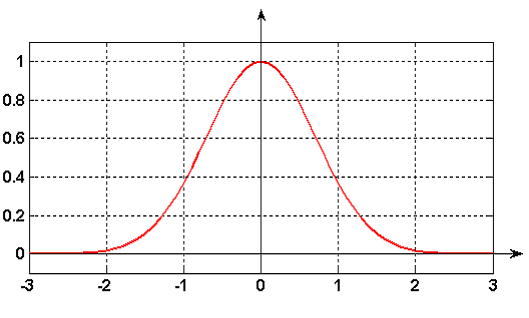
1) f(x)=e−x2
-
maximal domain of definition: R;
-
aperiodic function;
-
the graph does not meet the Ox axis*;*
-
intersection with the Oy axis: (0,1);
-
the function is even;
-
the Oy axis is a horizontal asymptote;
-
x→±∞limf(x)=0 is continuous on R;
-
also known as the "Gaussian bell curve".
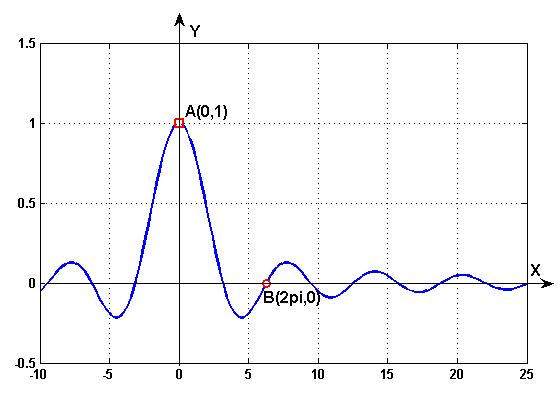
2) f(x)=xsinx
-
maximal domain of definition: R;
-
periodic function, with fundamental period 2π ;
-
the graph meets the Oy axis at (0,1), and the Ox axis at (kπ,0);k∈Z\{0} ;
-
the function is even;
-
x→0limxsin(x)=1 x→±∞limf(x)=0 has no asymptotes;
-
it is continuous on R;
-
known as the "damped sine".
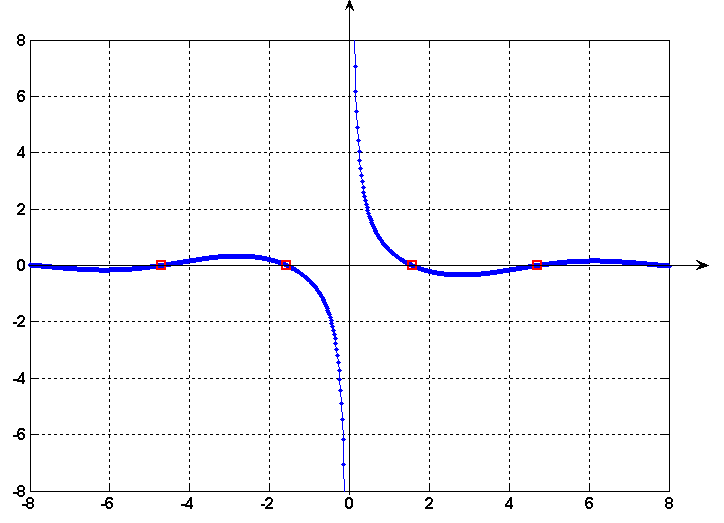
3) f(x)=xcosx
-
maximal domain of definition: R\{0};
-
periodic function, with no fundamental period;
-
the graph does not meet the Oy axis*;*
-
the graph meets the Ox axis at the points (2(2k+1)π,0);k∈Z
-
x→0x<0limf(x)=−∞ x→0x>0limf(x)=∞ the function is odd;
-
the Oy axis is a vertical asymptote;
-
x→±∞limf(x)=0 is continuous on R\{0};
-
known as the "damped cosine".
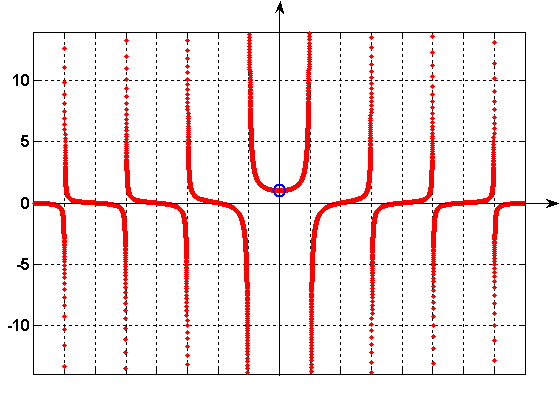
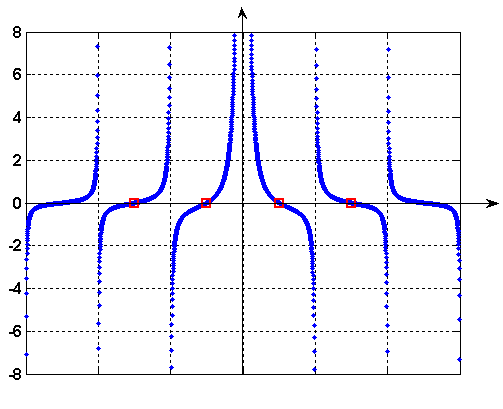
4) f(x)=xtgx
-
maximal domain of definition: R\{0,2(2k+1)π}, k∈Z;
-
periodic function, with no fundamental period;
-
the graph meets the Oy axis at (0,1);
-
the graph meets the Ox axis at the points (kπ,0),k∈Z\{0};
-
the function is even;
-
the lines x=2(2k+1)π,k∈Z are vertical asymptotes ;
-
x→0limxtg(x)=1 is continuous on (−2π,2π);
-
known as the "damped tangent".
5) f(x)=xctgx
-
maximal domain of definition: R\{0,kπ}, k∈Z\{0};
-
periodic function, with no fundamental period;
-
the graph does not meet the Oy axis;
-
the graph meets the Ox axis at the points (2(2k+1)π,0);k∈Z;
-
the function is even;
-
the lines x=kπ,k∈Z\{0} are vertical asymptotes ;
-
it is continuous on (0, π);
-
known as the "damped cotangent".
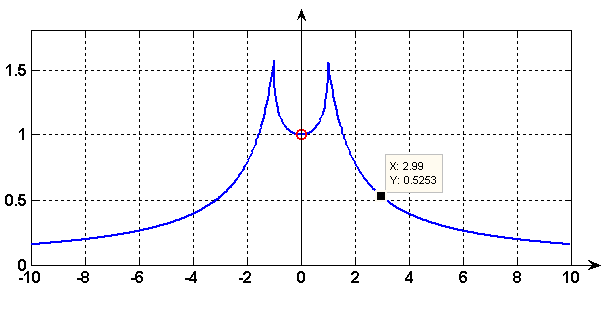
6)f(x)=xarcsin(x)
-
maximal domain of definition: R;
-
aperiodic function;
-
the graph does not meet the Ox axis*;*
-
intersection with the Oy axis: (0,1);
-
the function is even;
-
the Oy axis is a horizontal asymptote;
-
x→±∞limf(x)=0 is continuous on R;
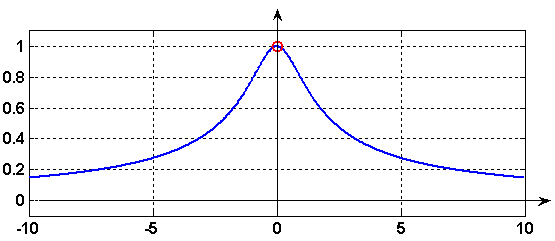
7)f(x)=xarctg(x)
-
maximal domain of definition: R;
-
aperiodic function;
-
the graph does not meet the Ox axis*;*
-
intersection with the Oy axis: (0,1);
-
the function is even;
-
the Oy axis is a horizontal asymptote;
-
x→±∞limf(x)=0 is continuous on R;
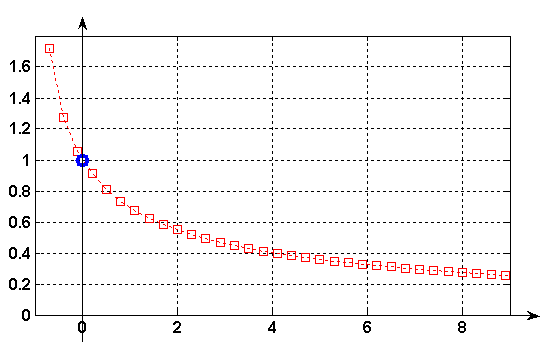
6)f(x)=xln(1+x)
-
maximal domain of definition: (−1,∞);
-
aperiodic function;
-
the graph does not meet the Ox axis*;*
-
intersection with the Oy axis: (0,1);
-
the Oy axis is a horizontal asymptote;
-
x→±∞limf(x)=0 is continuous on R;
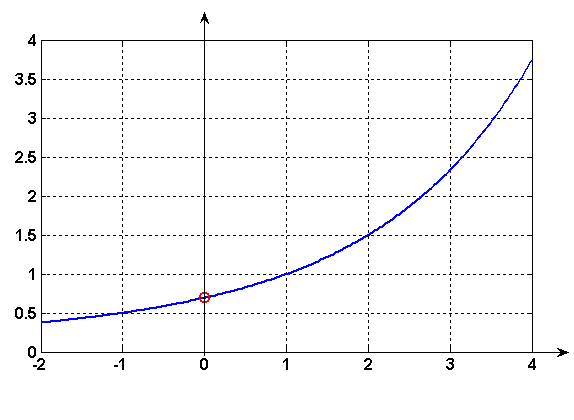
7)f(x)=x2x−1
-
maximal domain of definition: R;
-
aperiodic function;
-
the graph does not meet the Ox axis*;*
-
intersection with the Oy axis: (0,ln2);
-
the Oy axis is a horizontal asymptote;
-
x→−∞limf(x)=0 is continuous on R;